• Een wondere wereld

    In 2015, for the first time, I was afraid. Afraid for my precious Europe...
  • Bragging rights

    Boston broke the all-time seasonal snowfall record today! Fascinated by the immense amounts of snow, and mildly frustrated that all measurements were announced in inches rather than in centimeter, I decided to download the snowfall data and make my own figures.
  • Let it snow, let it snow, let it snow

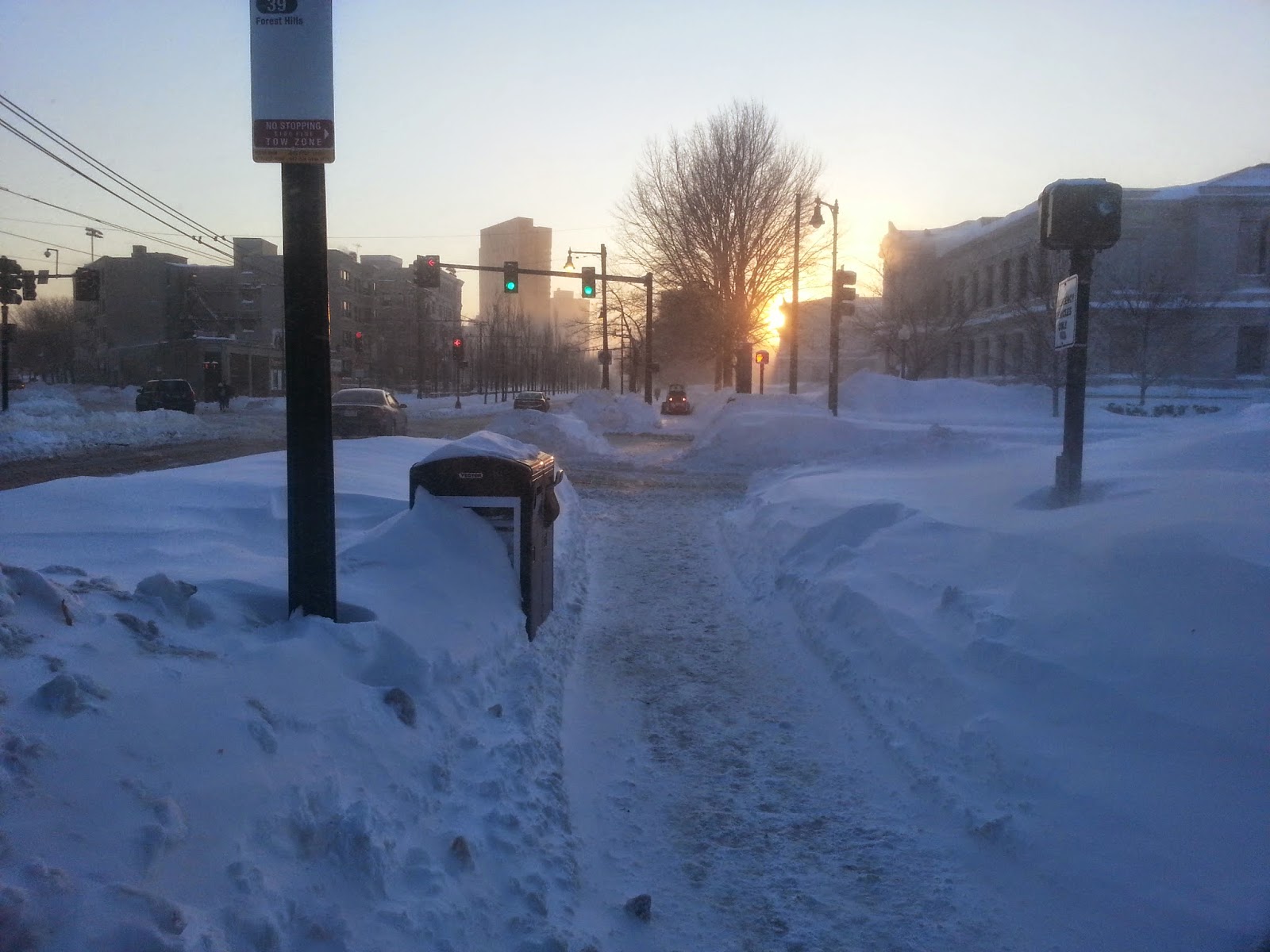
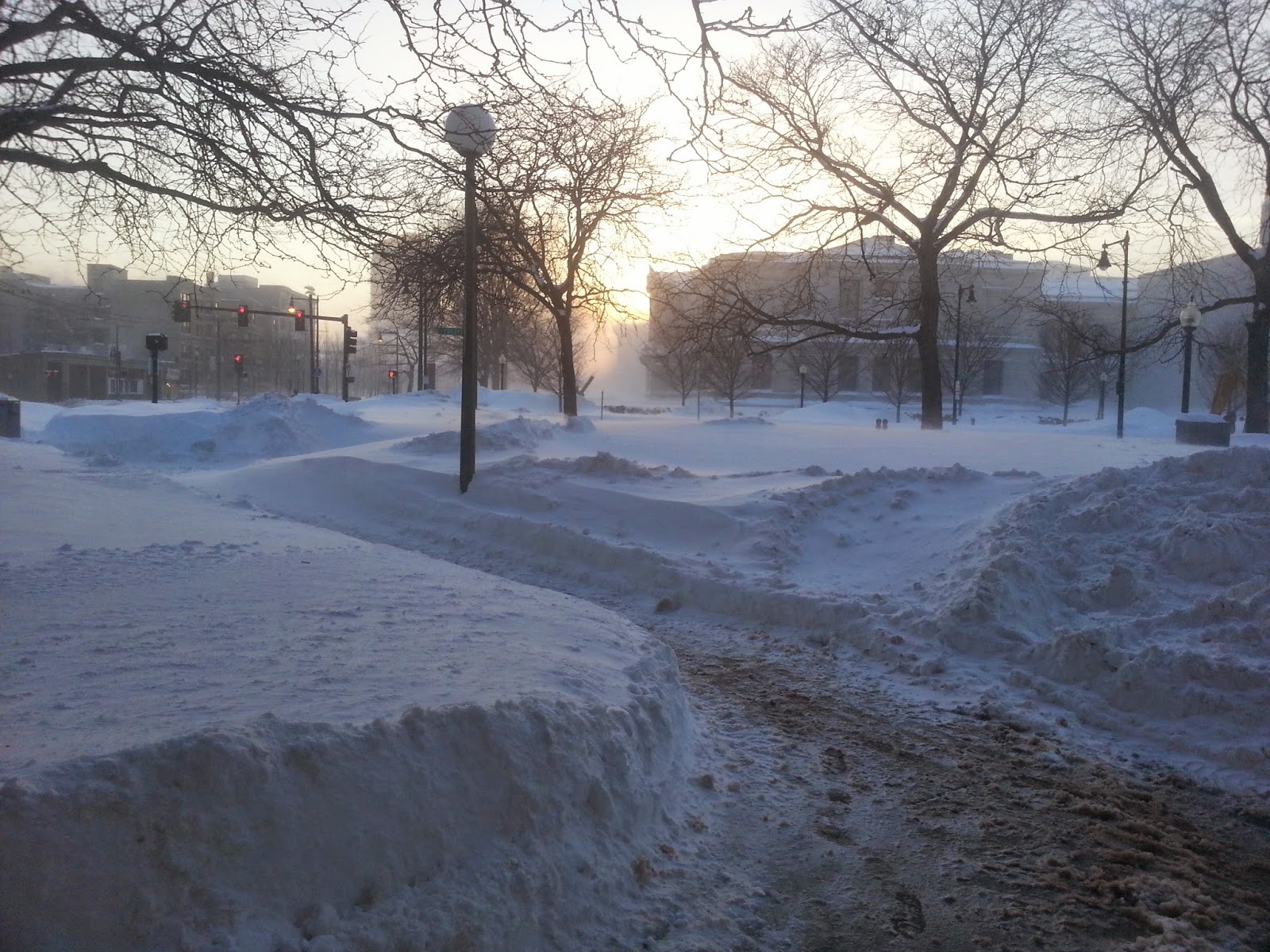
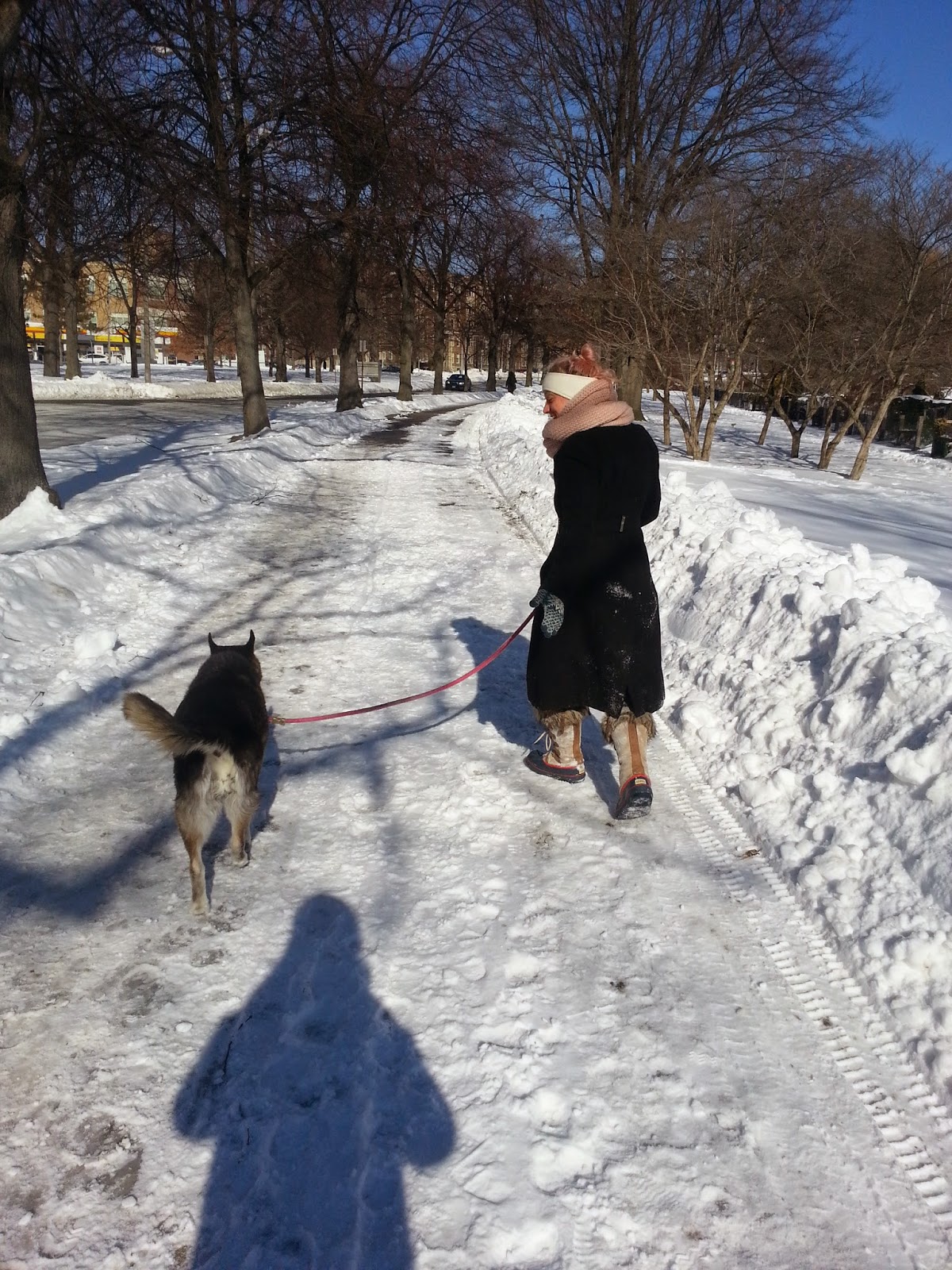
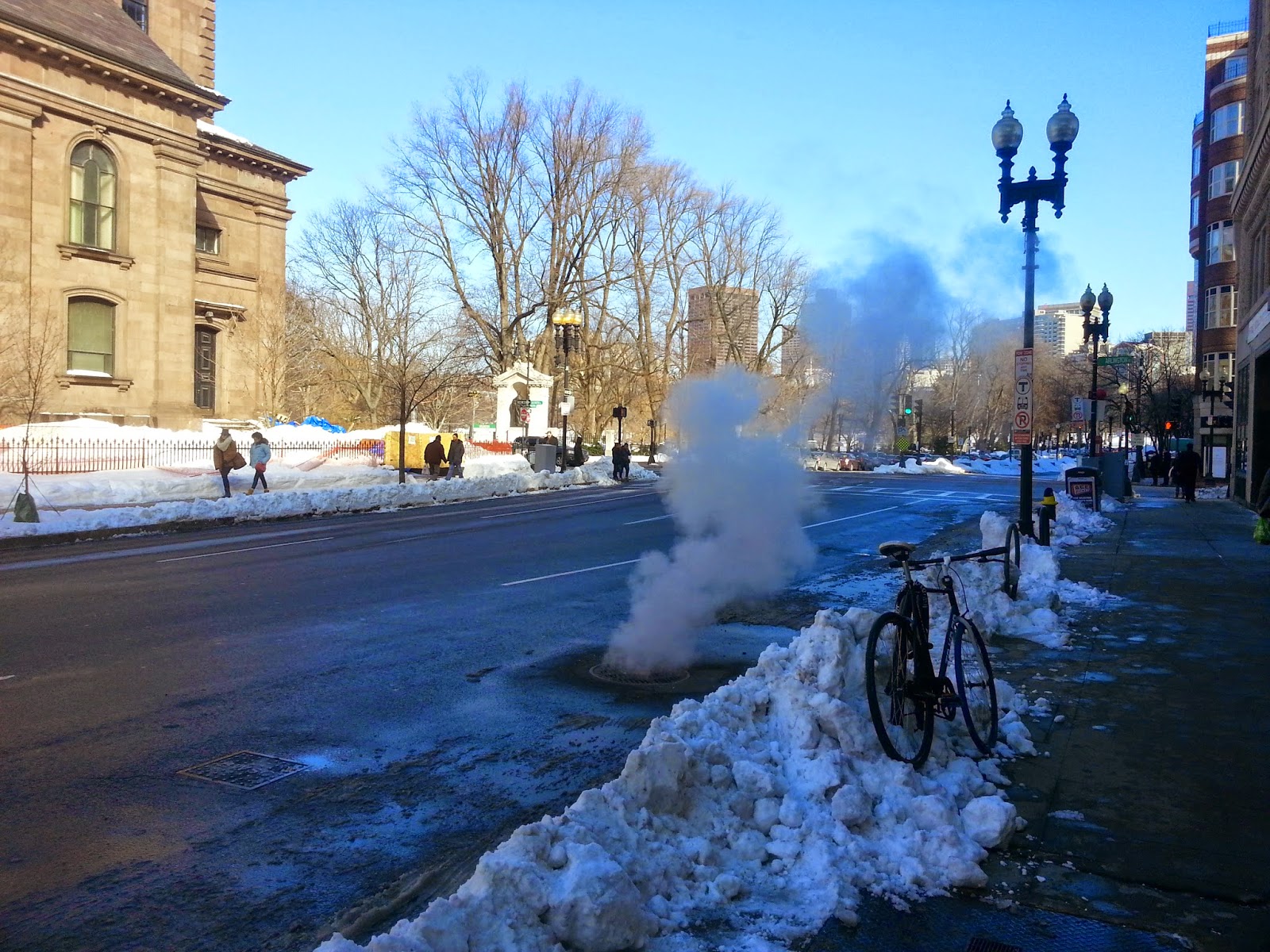
    The first two snowy weeks of a semester in Boston!

maandag 1 januari 2018


Donald Trump was inaugurated and the day after, the Women's March became the largest single-day protest in US history. And so began 2017. 


It was also a year in which I travelled so much that I better plant a small forest. A year where 38 flights took me to Medellin, San Francisco, Aarhus, Shanghai, Reykjavik, Birmingham, New York, Geneva, and always back again. A year in which Leiden became a real place with great friends. A place to call home. It was also a year in which many wonderful trips to Paris came to an end, after the woman I thought I'd grow old with and I broke up. It was a strange year to do astronomy and try to find and understand planets than our own. Or could science, with its quest for pure knowledge rather than immediate impact, be more important than ever? 

It may take many years to gauge, but there is no doubt that this year's populist toll is massive and extensive. It has been a year of believing we have truly reached the bottom, only to be surprised at how much deeper we could go. With a continuous attack on norms and values, it's hard not to normalize. It's hard not to shrug off what just a year ago would have caused outrage. 

But there is also hope. A year ago, I feared a populist wave would conquer Europe. Geert Wilders did not win the Dutch elections. In France, Le Pen made it to the run-off but was soundly defeated - in Paris, arguably hit the worst by terrorism in all of Europe, her divisive message fell flat and she received only 10% of the voting share.

An entire generation that's never cared for politics or saw much of a purpose, is now awake for the social and political struggle of their lifetime. When I was ready to abandon hope, there was always a friend or stranger standing up for what is right. To borrow the words of Barack Obama, I tell you this not to lull you into complacency, but to spur you into action because there's still so much work to do.

Above all, I hope we will eventually remember 2017 as the year in which women claimed their voice as equals. A year in which we all became aware of the extent of injustice both large and small - an awareness that for some of our population led to empowerment empowerment long-overdue, and for others, including myself, to a somewhat embarassing confrontation with a mirror. In the end, through the brave voices that spoke up in 2017, the world will be a better place tomorrow and for generations to come. If that's what we take away from the past year, it was worth it.

Going in to the next, there are a lot of reasons to be worried, but at least as many to be hopeful. We may come to remember 2017 as the start of a darker time, or the start of a massive wave of progress. It's up to all of us. Happy 2018!

zondag 1 januari 2017

On 22 March, I was going to fly home to Belgium. On my way to the airport in Denmark, I was stopped in my tracks as my dad called me. He said my flight may be delayed. There had been an explosion at Brussels airport. It quickly turned out to be the first of several bombs in Brussels that day. My flight was canceled. The airport closed for days. Dozens died, hundreds were injured, the country was traumatized. I’ll never forget the image of the airport covered in smoke. And that was only the beginning of 2016.

On 25 January, I successfully defended my thesis. I received a PhD in Physics and became Dr. Vincent Van Eylen. And that was only the start of 2016. In May, I moved to The Netherlands to continue my research as the Oort Fellow at Leiden University. Although a bit of my heart and plenty of my friends remain in Denmark, I was glad to start a new job and life in a new country. I’m lucky to have met so many wonderful new people in a matter of months. Somehow fitting for the political year 2016, my love and I visited Cuba, an intriguing country that defies summarizing in few words.


In Syria, cynicism and realpolitik carried the day. The Brits left the EU, in a vote that proved that economic anxiety and xenophobia can be a dangerously powerful combination. Although the UK has always kept a foot outside the EU door, the decision to leave the union dealt a powerful blow to a project dear to my heart. The day after the Brexit vote, I expressed hope that the outcome would serve as a warning sign, averting disaster in the US elections.

Alas. The US elected Donald Trump. As someone who has followed the US elections closely and watched the presidential candidates debate, the outcome was as surprising as it was maddening and frightening. Given the option of a sensible and deeply qualified candidate, voters opted instead for the person who displayed a staggering lack of preparedness and who made multiple statements that should be disqualifying for the presidency. There’s a wide range of motivations that compelled people to vote for Trump, but as we head into 2017, I don’t intend to forget that he won on a campaign of propaganda rather than facts, appealing to everyone’s basic instincts and to outright xenophobia. Despite the alarming outlook, I also know that many millions of people rejected Trump’s candidacy, opted for complex stories rather than generalizations, embraced facts, and chose to connect rather than divide. Although Hillary Clinton suffered from rampant sexism, those who heard her concession speech immediately realized that somewhere there’s a girl listening who’ll one day be Madam President.

Despite the personal fortune, 2016 has mercilessly fired away at my ever-optimistic mood. For most of my life, I’ve felt optimism, rooted in the belief that the arc of the moral universe is long, but it bends towards justice. For most of my life, I’ve been convinced progress is essentially a background process, which runs more or less automatically. The year 2016 served a harsh reminder that this is not so. That there is a road backwards and that there are forces pulling in that direction.

Perhaps the most important lesson of 2016 is that progress is not automatic. That the progress of the past few decades has been effected by the leadership of people fighting the good fight. We’ve been caught off-guard in 2016, so in 2017, we have to stand up. Let’s shake off the complacency of the past years. Let’s abandon the paralyzing pessimism of 2016.

If there’s one thing that I learned this year, it’s that there is a lot in this world that’s worth fighting for. In 2017, let us fight the good fight. Because I abandoned the belief that progress is automatic, but I haven’t abandoned believing in progress. Happy New Year! To a great 2017!


vrijdag 1 januari 2016

In 2015, for the first time, I was afraid. Afraid for my precious Europe. It's only three years ago that we, the European Union, won a Noble Peace prize, for bringing decades of peace to the continent. In 2015, there's no denying there's a war raging at our border. The Ukranian-Russian war revealed Europe's limitations, unable to prevent it from unravelling. Unable to interfere. Embarassing. But perhaps sometimes doing nothing is better than doing the wrong thing? I hoped.

On the other side of the border, in 2015, youth unemployment in Greece stood at 50% and Greek banks closed down for weeks. Inexperienced Greek politicans collided with their arrogant European counterparts and almost pushed Greece out of the common European currency. A terrible blow to the euro project, a powerful symbol of the ever-growing European idea, was only avoided at the eleventh hour. The price paid: humiliation of millions of European citizens, in a deal that was meant to punish a country rather than help it. For the first time ever, I was ashamed to be European.

But both the Ukranian war and the Greek debt crisis faded from the news as Europe faced an even larger challenge. Dozens, later hundreds of people died and washed ashore the southern coasts of Europe, as they tried to seek refugee from war in the Middle East. Indifference was replaced by outrage over the picture of a dying girl, only to be replaced by indifference again. Borders which had disappeared within Europe were replaced again, by security checkpoints or sometimes even by walls or fences. Never was the European failure as clear as when thousands of refugees marched across Europe in search for shelter. For the second time in my life, I was ashamed to be European.

In my own and dearest Belgium, refugees awaiting registration were sleeping in the streets. The capital of Europe could not provide shelter for people who risked their lives and left their families to get there. Ironically, this was also one of the moments that gave me most hope this year. Where the Belgian government did not succeed in relieving the basic needs of these people, hundreds of Belgian citizens stepped up with tents, blankets, clothes, food, money, and helping hands. Similar scenes in the rest of Europe. There were terrible and deeply saddening stories of mosques or refugee centers being attacked, but the amount of caring, sharing and welcoming people greatly outnumbered those. In a few decades Angela Merkel will be remembered less for her handling of the Greek crisis than for her historic words. Wir schaffen das.

In 2015, acts of terrorism shook Europe. The Paris attacks initially referred to the Charlie Hebdo shooting, only to be replaced by even greater terror in the same year. Right as the news broke, I was afraid. I'm not afraid of terror attacks as much as I am worried about the way we choose to deal with them. The bellicose language of French President – and socialist – Francois Hollande resembled that of George Bush after 9/11. The Bataclan shooters turned out to be Belgian, but no one ever asked me to apologize because of my nationality. Unfortunately, that courtesy hasn't always been extended to a billion muslims around the world. In Brussels, soldiers on the streets have become a semi-normal sight – greeting me as I take the Thalys to Paris. During a few days of grave terror threat, Brussels was virtually locked down in scenes that resembled Baghdad more than the capital of Europe. When the police asked the Belgian twitter scene not to report its activity out of fear of tipping of potential terorrists, my country showed it can still make light of the situation by flooding twitter with cat pictures.


In spite of the pessimistic tone above, for me 2015 was a wonderful year. It started out with a semester in Boston, where I had the pleasure to be a visiting graduate student at MIT. It was a great experience, which not even a record-level snow fall could temper. I made it to Hawaii. I moved in with a fantastic person! I finished my PhD thesis! In 2016, I will get to defend my thesis and soon I hope to call myself a Dr. – after that, once again, the future is wide open. In a few months, I have no idea which job I will be doing or even where I will be. For 2016, I wish for my new work life to be exciting, and I wish to make it work with my girlfriend no matter where the adventure may take me.

Finally, for 2016, I wish for my Europe, my Belgium, and yes, my Denmark, to regain its confidence and its openness. I've heard stories of my grandparents talking about war and its horror. When I tell my kids or grandkids, I will tell them I've been lucky never to experience war. And I want to tell them that the parents or grandparents of some of their friends, were refugees who were fleeing war in other places of the world and came to our great continent, where they found shelter. That when they drowned at our shores, we put a halt to that and our rescue boats saved them. That we gave food and housing to whoever needed it. That we welcomed the next generation of Europeans. That they were many and things weren't always easy, but we rose up to the challenge and dealt with it. Then I will proudly tell them that in my country, in my continent, every single man, woman or child who needed help received it. Because yes, we can – and we have the money, infrastructure, courage and warmth to do so. Wir schaffen das. Because we are the richest and most developed continent in the world, and we lead by example. And because this is 2016. Happy New Year!


Vincent

maandag 16 maart 2015

Today came the announcement that it finally happened: Boston broke the all-time seasonal snowfall record today! This winter, 275.8 cm (108.6 inches) of snow has fallen at the Boston Logan station. The previous record was set 19 years ago, when 273.3 cm fell in the winter of 1995-1996. Those who experienced that winter now officially have their bragging rights revoked!

When I got to Boston at the end of January it was quickly becoming clear that February was quite exceptional, and record after record fell. We had the snowiest 7 days on record, the snowiest 30 days, the snowiest February, ... However, as close as we were to the all-time record at the beginning of March, there was no guarantee for breaking it and there were 11 snow-free days until the record was finally set today. With a taste of spring, the record-fever disappeared, until somewhat unexpectedly the last few centimeters of snow fell today!

Fascinated by the immense amounts of snow, and mildly frustrated that all measurements were announced in inches rather than in centimeter, I decided to download the snowfall data and make my own figures. 


The cumulative snowfall shows all previous snowfalls per winter, and highlights the previous top 3, as well as this year's record. For convenience I have reported values both in centimeter and inches. The data was gathered as Boston Logan weather station, which has data that goes back to 1936, although I have not included the first two years because it appears to contain some erroneous measurements. Since 1938, the data is uninterrupted and winter and summer, the snowfall is measured daily. The data can be freely downloaded from the National Oceanic and Atmospheric Administration (NOAA) I have divided it into seasons which are shown as grey lines. Their average is shown in black, which is calculated by counting days since the start of the winter to deal with leap years. (The data analysis which produced the figures was done in Python. The figures may be freely reused as long as their source is credited.)

What is obvious from the cumulative snowfall figure is that this winter's snow was heavily concentrated around February (when do you think I arrived to Boston?). The following figure shows snowfall during the past 30 days at any date:


This means that any point in this figure represents how much snow has fallen during the 30 days prior to it (including the day itself). On February 22, 239.7 cm (94.4 inch) of snow had fallen in the previous 30 days! It's clear that nothing like that has happened in the 77 previous years. A similar (though slightly less impressive) figure can be made for a 7-day window.

Finally, I have attempted to describe the seasonal snowfall by a simple Gaussian distribution. The best fitted distribution has a mean snowfall of 111.1 cm, with a standard deviation of 53.1 cm:

However, when this distribution is illustrated in a histogram, it is clear that a Gaussian distribution does not provide a great fit. For one, true snowfall obviously never goes below zero (in fact, the least observed is 23.7 cm). Snowfall in the range of 40-150 cm is fairly common, with a few exceptions exceeding that range, such as the winter of 1947-1948, 1993-1994, 1995-1996 and now 2014-2015.

Finally, is there much more snow to come? That's hard to say. Looking at the cumulative snowfall (top figure), the black curve (indicating the mean) is clearly starting to flatten out, indicating most snow has most likely fallen by now. Nevertheless, snowfall in March (and April) has a significant scatter, with some seasons getting no snow at all and others getting 1-2 significant storms. 

Below are some snowy pictures. To be fair, most were not taken in the last few days, and the city looks quite a bit less surrealistic these days. Some pictures were taken at an area which was used by MIT to collect the snow removed from its campus, a place which became known as The Alps of MIT.


zondag 15 februari 2015


In between days with flights canceled due to snow storms, I safely got to Boston two weeks ago for the start of a semester of PhD research at MIT. But before I dig into the snow situation, let me say a word about my flights. Last year I wrote a post about my frustrations with Lufthansa, but this time my experience was much better. With a delayed flight into Munich, I would have missed my connection to the States if it wasn't for a personal service bus picking me up directly from the plane, driving me over the tarmac to the right terminal and channeling me through security. Ten minutes later I had my seat belt fastened on my connecting flight with a few minutes spare.


Upon arrival the cold hit me, even if I spent only a few minutes waiting for a taxi. The temperature was around -10 degrees (Celsius, of course) but it was the wind that really caused the damage. I was very thankful for the fresh soup my new flatmate and her beautiful dog had prepared me upon arrival. Within days I would become familiar with the concept of wind chill and the associated warnings about frostbite omnipresent in the weather forecasts. But cold we can deal with, armed with a thick scarf and the blue cap my friend Sanne made me (thanks!), and most importantly with a few years of experience with Danish winter.


But then there is the snow. Here one may argue that Denmark also gets snow in winter, but it would be like pointing out there's no need to worry about a sunburn in the Canary Islands because the same sun can sometimes be observed from Denmark. Technically correct but also largely irrelevant. The amount of snowfall is of another order of magnitude. The dynamics are altered. Usually during or shortly after the snow, the roads get plowed and a salty mixture melts the remains into a layer of dirty slush. To be fair, that happens here too. But it is not as simple as that. One of the more intriguing complications that I had never previously considered: what to do with all the snow?


When a storm drops half a meter of snow, the streets still get cleared and so do the sidewalks, but that leaves immense piles of snow safely separating cars from pedestrians. The piles block part of the road and can greatly limit visibility at crossroads. A day or two after heavy snowfall the sidewalks are usually in decent shape (although a bit of acrobacy can be helpful to avoid getting stuck), thanks to relentless efforts from city employees and civilians. Boston has a law which requires its citizens to shovel the walkways in front of their houses within hours after the end of any plowable event. Empty lots are used as snow farms to deposit excess snow but even they have their limits. Dumping the snow into the Charles River is prohibited for environmental reasons, although there has been some debate about temporarily lifting the ban. During the last few days the city has been aggressively melting snow as well as literally driving truckloads out of the city, to make room for more to come.


Even for a city that is used to winter storms I am told that this year is exceptional and the statistics back that up. Some all time records have already been broken, including those of most snow in seven as well as thirty day time spans and that of most snow in February (already!). The winter has entered the “Top 10” of overall snowfall records and there are still a few weeks of prime snowing season left to attack the winter of 1995-1996's all-time record. The Boston metro (“The T”) has had trouble operating and even closed entirely last Tuesday – its head has meanwhile resigned. When storms are the worst schools close and kids get a snow day. Such days are anticipated every winter and compensated elsewhere, but with the amount of snow days this season (four in the last two weeks only) the summer holiday may get shortened.


Although I am looking forward to explore the city under more Spring-like conditions, the weather is excellent for hot chocolate and research productivity. I have been welcomed by very nice people and I watched my first ever Super Bowl (and even liked American Football!). I ordered snow boots and joked that their arrival would keep the snow away. Since I got them on Tuesday that has worked surprisingly well, but while I am writing this the National Weather Service has issued a blizzard warning for tonight and tomorrow. They predict the winter storm will bring a foot of snow or more, by which they mean about 30 cm should be expected.


As I started to complain about even more snow and even less space to put it, the news struck about two terror attacks in the Danish capital leaving two dead and several wounded to place it all into perspective. So let it snow. But while we are at it... let's break that 1995 record so there is something to write home about!


maandag 28 april 2014


A few weeks ago, my friend Tine visited me in Aarhus, and during the past Easter weekend I had the pleasure of welcoming my parents. Since they've seen Aarhus before and I haven't been exploring the rest of Denmark much, this provided us with the perfect occasion for a three-day trip around Fyn, the large Danish island. 


After having provided them with a fine dinner on Thursday (and myself being provided with some goodies from Belgium - yes, some Belgian beer and chocolate), on Friday we took off to Odense, Fyn's main city. The place is mostly known as the birthplace of Hans Christian Andersen, the famous Danish poet. We therefore had to visit the H.C Andersen museum as well as take the Andersen-route through the city. 

However, it turned out there was more to Odense than the 19th century writer of fairytales, and the photo museum was certainly worth the visit. The city itself was nice and quiet, with some great parks, and a nice Italian place to finish the day.


zaterdag 4 januari 2014

More than a year and a half ago, I first came across this blogpost ("What Happens When You Live Abroad") by Chelsea Fagan. She writes about moving abroad and about a feeling of belonging in more than one place. Consequentially, there is always a part of you that is far away from home. 

More than two years after I first left Belgium, these words still articulate a feeling that perhaps will never entirely disappear (and that does not have to be a bad thing). I know the message resonates with many people who live abroad, and it is phrased so much nicer than I could ever put it to words, so I am re-posting it here.


woensdag 1 januari 2014


In 2013 there was a big train crash in Spain, Syrian children died of nerve gas and the Philippines got hit by a major typhoon, while Edward Snowden dramatically demonstrated the relativity of privacy. The Boston marathon got startled by a bombing, a Nairobi shopping mall got invaded by terrorists. Belgium changed Kings from Albert to Filip, the Vatican traded Benedictus for Franciscus. 

In Thirteen, Europe didn't fall apart and the recovery from crisis times has really begun. May Europe really overcome its internal struggles in 2014 and may European solidarity regain its true meaning. May Ryanair fly you to pretty European cities! May new generations of European students become the continent's ambassadors, educated in different countries through Erasmus exchanges. From Belgium to Denmark, Germany through Greece, in Romania or Spain, places are beautiful and people are pretty. May you discover the continent, great in diversity! A Europe which can unify and aid where necessary and preserve all the unique cultures, is a wonderful project which deserves your optimism and encouragement! For the people from Belgium, I wish for us to be a bit more conscious and proud of the great things our little but beautiful country possesses, and of course that we may be victorious at the World Cup in Brasil!

A year ago, I wrote here about my New Year's resolutions for the past year. I announced I would start to play the piano again, as well as to learn the Danish language and speak it fluently. I did buy myself an electric piano and have played it a bit, albeit not nearly regularly enough to really improve on my (very basic) skill level. I have spent most of the year in Danish class at LaerDansk, where I unfortunately missed the exam of the final module 5, as I was in the US in November. However, people will now have a hard time gossiping about me in my presence, and I can watch Borgen without subtitles. 

So perhaps there is still a little bit of room for improvement for both - does anyone know a nice piano teacher in Aarhus? And for my Danish colleagues, så snakker vi kun på Dansk! Jeg kan godt forstå det, du må bare hjælpe mig lidt! - but largely, mission accomplished! The biggest personal achievements during the year Thirteen have really been job related. I published a paper in Summer and had another one accepted for publication. I talked about this last one - of which I am especially proud and in which we discovered a new interesting exoplanet! - at MIT and at Harvard and presented it on a poster at the NASA Kepler conference. I've been to the US three times in the past year, I operated a telescope for the very first time in La Palma, I had a great summer school at the beautiful Onsala in Sweden. I've been teaching students about exoplanets, during a course which only two years ago was my own very first introduction to the research field. 

'13 for me has also meant really settling down in Aarhus. Many nice new friends have made me feel at home. While an international environment inevitably means no one stays forever - sadly, Sandra, one of the nicest people who was there from day one of my Erasmus experience, went back to Spain a few weeks ago - I have high hopes for there to be some lasting friendships nevertheless. Finding a lovely apartment in the middle of town and an even greater roommate Catalina has also played a big role in calling Aarhus home!

As publicly announcing resolutions appears to be beneficial for their chances of success, here it is again. In 2014 I intend to explain more astronomy to everyone. Many scientists do really great research, largely funded by tax payer's money. Unfortunately is often complex and difficult to bring to a broad audience. I will make my own little contribution by attempting to explain some of the universe's most interesting mysteries to anyone that may be interested. I will be happy to talk about extra-solar planets which may be quite like or unlike our Earth and some of which may have life. No matter your scientific background, as long as you are interested or intrigued. Secondly, I want to find the time in 2014 to travel for longer than two weeks and discover a country I haven't seen before.

What I finally wish for everyone for 2014 is spelled out in the Holstee Manifesto at the bottom of this page. This is your life. Do what you love, and do it often. Life is short. Live your dream. Wear your passion. Hello 2014! Happy New Year!


Vincent

vrijdag 20 december 2013

November 2013 was the third time I met with the United States this year, and this time we saw each other for more than a few days. The first destination: San Francisco, or more precisely, Mountain View. The headquarters of NASA Ames is located there, and they were hosting the second Kepler science conference. Despite a worthy try by the American politicians to interfere with the conference by shutting down the government only weeks before, the science meeting took place as scheduled and we spent a week discussing results using the Kepler satelite's data, and their implications on exoplanet research.

Being together with a few hundred colleagues from all over the world to discuss science always has something inspirational to it. The conference's public lecture was given by prof. Frank Drake, known to astronomers and non-astronomers alike as the person behind the Drake equation. This equation, which he failed to mention at any point during his talk, predicts the chance of having life on another planet by multiplying factors such as the amount of stars, the amount of planets and the amount of planets which can support life. I share a sense of optimism with most exoplanet researchers that there is likely life somewhere out there, and that we might be able to detect it in the not too distant future. Or to paraphrase Frank Drake, perhaps we will soon connect to the intergalactic internet.

As with any conference, you need something remarkable to happen to make it worth remembering. This time the price went to my advisor, whose rental car turned out to be a white Mustang (with remarkably little space in the back seats).


zondag 25 augustus 2013

Astronomers do astronomy, and while that involves computer work more often than most people would expect, we do have telescopes. I went on a trip to La Palma, to observe at the Nordic Optical Telescope (NOT) for two nights. In the traditional scientific division of tasks, there is the theory and the observations (in other sciences, the experiment). While I would never call myself an observer, seeing a magnificent night sky and an amazing milky way, doing hands-on astronomy moving a telescope around to find that star to take spectra of... It serves as a nice remember of why astronomy is so fascinating. 

La Palma, one of the Canary Islands, has its Roque de los Muchachos filled with telescopes from all over Europe, as I posted last week (in Dutch) on Scilogs. While preparations for a night of observations typically start in the afternoon, and you can only go to sleep after having closed down the telescope dome at sunrise, I was lucky enough to have two observing nights on Thursday and Monday, nicely separated by a weekend off. I was also fortunate enough to be there with Jens, a fellow PhD student who has worked at the NOT for a year. He knew both nice people and places on the island.

Most definitely worth mentioning - and highly recommended to anyone who happens to visit Santa Cruz on La Palma - is Restaurant Enriciai. With our group of eight people, we took up half of the restaurant, quite literally, as there was only one other table (for six people). A menu does not exist, but the lady of the house tells you what is on the menu that day, in Spanish, while addressing everyone as 'mi amore'. She's one of a kind, and some kind of strange combination between an overly friendly mother and an ex-girlfriend who is happy to finally see you again. It all adds to the wonderful atmosphere, to which the Mediterranean climate - which allows for a night out in nothing more than a T-shirt - also has a valuable contribution. And I should probably mention - or perhaps I shouldn't - that bottles of home-made alcohol appeared on our table after I had finished my baked tuna. This kind of dining experience, you just can't get in Denmark. 

There was the beach, including a little sun burn, and a game of paintball. And some amazing views, in between the telescopes on the Roque de los Muchachos, but also when climbing another volcanic mountain. And apart from observing at the NOT, we also got a tour at the Isaac Newton and William Herschel telescopes, at the Swedish Solar Telescope and at the KU Leuven telescope Mercator. After all, I am an astromer.


Mogelijk gemaakt door Blogger.